snyders: (Default)
Кажется невероятным, что лингвистическая  модель, генерирующая по одному слову (token) за раз в состоянии синтезировать связные тексты, многоходовую логику и решения задач.
Однако если мы переместимся в пространство смыслов, и на заданный вопрос существует более или менее уникальный ответ, то главное происходит, когда  модель пропускает через себя запрос (query), и понимает этот смысл.
То, что она потом генерирует ответ по одному токену за раз, или то, что ответ может быть сформулирован многими разными способами (в том числе и на разных языках) уже не важно.
snyders: (Default)
"The discovery of a gene shared by two unrelated species of fish is the latest evidence that horizontal gene transfers occur surprisingly often in vertebrates."
https://www.quantamagazine.org/dna-jumps-between-animal-species-no-one-knows-how-often-20210609/

"He points out that the immune system’s ability to generate an astronomical diversity of antibodies seems to have come from a TE (transposable element) that suddenly entered the genome of the ancestor of all jawed vertebrates 400 million years ago."
snyders: (Default)

"Did Leonardo da Vinci come up with all of his ideas and inventions by himself or did he also borrow some of them from ancient scientists including those who lived 1,700 years before him."

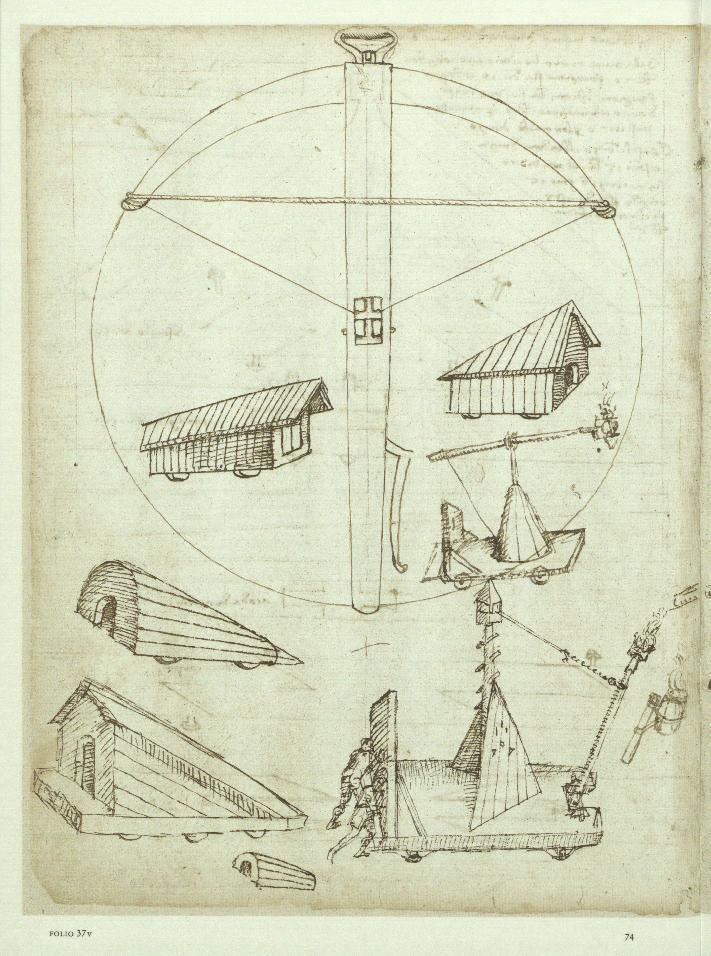
Неплохой фильм про Леонардо, со слегка нестандартным подходом - пытается пытается показать, что он "стоял на плечах гигантов", а не был просто "гений среди удобрений". Пара имен мало известных инженеров, предшественников Леонардо из этого фильма: Roberto Valturio (1405–1475),  Mariano di Jacopo (1382 – c. 1453), called Taccola

"The designs of armaments contained in Valturio's work were copied by Leonardo da Vinci in his weapons projects proposed to Duke Ludovico il Moro in 1482 in Milan."
Это то письмо миланскому герцогу, где он описал, какой он крутой военный инженер, и в конце приписал - ну еще рисую немного.


(рисунки из книги Таккола)
snyders: (Default)
Допустим А сделал открытие в своей секретной лаборатории, записал и никому не показал. Потом через 100 лет В сделал это же открытие заново и смог понятно его описать так, что оно приобрело известность. Еще через 50 лет С нашел работу А. Кому положена слава открывателя А или В?

По-моему А не положено ничего, кроме признания -- молодец, что ты такой умный. Хотя у А есть временной приоритет, раз он им не воспользовался он эквивалентен человеку из глуши, который сам переоткрыл закон Ньютона.
snyders: (Default)
Если книгу уронить с 5-го этажа ей почти ничего не будет.
Если половина книги сгорит, другая еще будет читаться.
Книгу можно читать даже под водой.
Если по книге ударить молотком -- ей почти ничего не будет.
snyders: (Default)
A hydraulis is an early type of pipe organ that operated by converting the dynamic energy of water (Ancient Greek: ὕδωρ hýdōr) into air pressure to drive the pipes (Ancient Greek: αυλός aulos). Hence its name hydraulis, literally "water (driven) pipe (instrument)." It is attributed to the Hellenistic scientist Ctesibius of Alexandria, an engineer of the 3rd century BC.

http://en.wikipedia.org/wiki/Hydraulis
snyders: (Default)
Somehow watching these games left a sour feeling of a setup.

Jeopardy is probably not a really interesting challenge since it is:

- about factoid questions ( Who, What, When, Where) which are the easiest in QA.
- questions are often of very structured type (what is asked, often appears after the key word "THIS")
- lots of factual information in the question -- just googling many questions would give the right answer at the top

Competition was unfairly organized:

-computer got the text of the questions immediately and could use all the time it takes the host to read the questions for thinking.
-computer had an "instant buzz" advantage over humans. Computer picked its lead on questions for which humans also knew the answers, they just could not beat the computer in the speed of pressing the button.

The amount of IBM advertisement during the show really went over the top. There is no way to check whether the contestants were not paid to fail, but it could be. Comparing this challenge to the "Deep Blue vs Kasparov" challenge is really far fetched, since these contestants had no reputation to loose. While for Kasparov everything was at stake.


A more interesting challenge would be to:

-give equal time to humans and computer (ex. 10 sec, 60 sec) and checking correctness of the answers not the speed.
-pose questions which require at least several queries with qoogle (i.e. require some knowledge extraction and analysis)
-try to solve "Chto-Gde-Kogda" style questions, not simple factoids. Checking reasoning rather than information.

snyders: (Default)
Даже научив компьютер проходить тест Тьюринга, к пониманию, что такое сознание, мы не приближаемся.
snyders: (Default)
Побыл день биоинформатиком. Попробовал живьем Reverse Transcription и qPCR.
snyders: (Default)
1. Кто мешает в gmail сделать поиск по типу этэчмента? А не просто "has attachment".

2. При автоматическом переводе зачем спрашивать с какого языка -- сам посмотри с какого.(Если есть пара предложений теста -- это тривиально, по кр. мере для наиболее распространенных языков). Спроси только на какой -- да и тут можно было бы сделать "I feel lucky", запомни наиболее частые предпочтения.

Phrase

May. 31st, 2009 11:20 pm
snyders: (Default)
He stopped doing artificial intelligence and moved to garbage collection.

Profile

snyders: (Default)
snyders

December 2025

S M T W T F S
 123456
78910111213
14151617181920
21222324252627
282930 31   

Syndicate

RSS Atom

Most Popular Tags

Style Credit

Expand Cut Tags

No cut tags
Page generated Jan. 13th, 2026 04:05 pm
Powered by Dreamwidth Studios